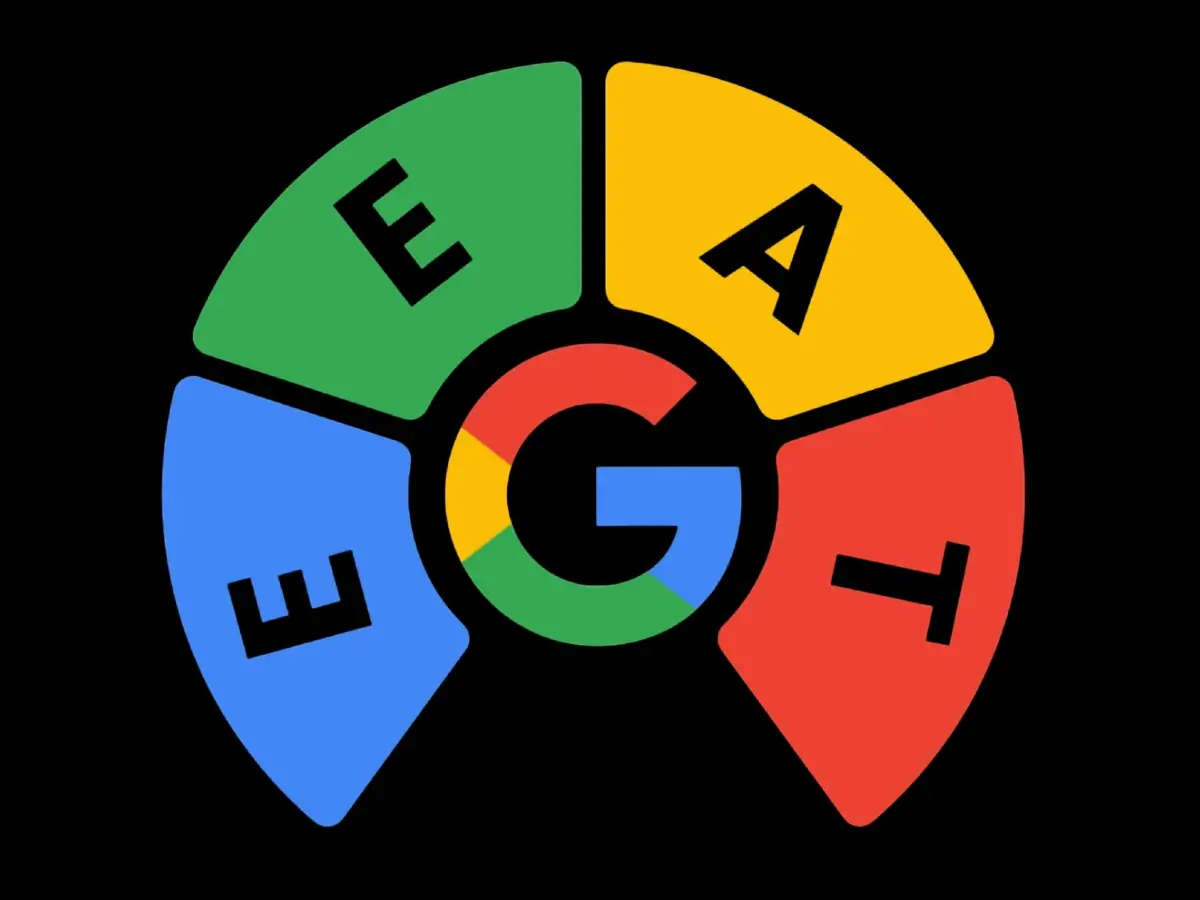
In 2014, Google’s quality assessment guidelines introduced the term E-A-T, which stands for Expertise, Authoritativeness, and Trustworthiness. In December 2022, Google added a new element to these standards – Experience, which turned E-A-T into E-E-A-T or Double-E-A-T.
To get high rankings in Google search, you need to demonstrate high E-E-A-T scores.
What is E-E-A-T?
Imagine the situation: you are looking for advice on how to treat the flu online. Which site would you trust with your health: an amateur blog or an official medical portal? Most likely, you will choose the second option. This is the principle behind E-E-A-T on Google.
E-E-A-T — це абревіатура, яка означає:
- E – Expertise. Reflects the author’s competence in the topic.
- E – Experience. Indicates that the content is based on real knowledge and practical interaction of the author with the topic.
- A – Authoritativeness. Reflects the reputation of the author or website in its field.
- T – Trustworthiness. It guarantees that the information on the website is true and accurate.
The E-E-A-T parameters are critical for sites in the YMYL (Your Money or Your Life) category, whose content can affect the health, finances, or well-being of users. These topics include:
- medical information;
- financial advice;
- legal assistance;
- recommendations for a healthy lifestyle.
Sites with such content must demonstrate a high level of E-E-A-T to ensure that the information is accurate and useful. Failure to comply with these standards can have a negative impact on people’s lives.
How does E-E-A-T affect SEO?
Google emphasizes that E-E-A-T is not a separate ranking factor. Instead, the algorithms analyze indirect signals that correlate with a high level of E-E-A-T:
- positive feedback from users;
- expertise and credibility of content authors;
- high-quality external links.
Google also uses assessors to evaluate the quality of websites based on E-E-A-T and help improve its algorithms.
How to improve E-E-A-T?
Here are some tips for working on E-E-A-T factors:
Increase your content expertise
- Involve experts in the creation of materials.
- Indicate the authors of articles, their experience and qualifications.
- Use Schema.org markup for authors, citations, and verified materials.
Demonstrate expertise in your content
- Use real-life examples, photos, screenshots, or videos.
- Show the author’s practical experience in the topic.
Add authoritative links
- Refer to trusted sources: research, statistics, government resources.
- Use links to reputable media and professional portals.
Keep your content up-to-date
- Update the information on the website regularly.
- Add new articles and correct errors.
Collect feedback
- Motivate customers to leave positive feedback.
- Display them on your website or company profiles.
Check the technical aspects of the website
- Optimize page loading speed.
- Use HTTPS and SSL certificates.
- Provide a responsive design for mobile devices.
Additional ideas for improving E-E-A-T factors that will strengthen Google’s trust
| # | Categories | Item |
|---|---|---|
| 1 | Pages on the website | About us |
| 2 | Mission | |
| 3 | Management | |
| 4 | Our team | |
| 5 | Portfolio / cases | |
| 6 | Customer reviews | |
| 7 | Partners | |
| 8 | Locations. | |
| 9 | Where to start | |
| 10 | Pricing models | |
| 11 | Our approach | |
| 12 | Custom calculators / tools | |
| 13 | Policy of sustainable development | |
| 14 | FAQ | |
| 15 | Awards | |
| 16 | Vacancies | |
| 17 | Become our agent | |
| 18 | Referral program | |
| 19 | Insights and news | |
| 20 | Expert opinion | |
| 21 | For journalists | |
| 22 | Our experts for media | |
| 23 | Company history | |
| 24 | Key values | |
| 25 | Corporate culture | |
| 26 | Ethics | |
| 27 | Contacts | |
| 28 | Authors | |
| 29 | Mentions in the press | |
| 30 | Subscribe to the newsletter | |
| 31 | Disclosure of information on partnerships | |
| 32 | About cookies | |
| 33 | How we conduct reviews | |
| 34 | Why you should trust us | |
| 35 | EEAT on the website | Phone numbers |
| 36 | Addresses | |
| 37 | Trust badges | |
| 38 | Blocks with information about the authors | |
| 39 | Links to social media (brand and employee) | |
| 40 | EEAT off the website | Activity in social networks/YouTube (depends on the niche) |
| 41 | Social media profiles | |
| 42 | Guest posts / link insertion (with brand mention) | |
| 43 | Editorial materials (in-depth research) | |
| 44 | Reddit / Quora (free or paid promotion) | |
| 45 | Forums (the same as Reddit) | |
| 46 | Press releases (brand news) | |
| 47 | Digital PR (cool links and brand mentions) | |
| 48 | HARO / Connectively | |
| 49 | Reviews (review sites + paid articles) | |
| 50 | Selections / lists | |
| 51 | Podcasts and interviews | |
| 52 | Influencer marketing | |
| 53 | Contextual advertising (to increase branded queries) | |
| 54 | Courses (on third-party platforms) | |
| 55 | Books (Amazon, Goodreads, etc.) | |
| 56 | Marketplaces (Upwork, Fiverr, etc.) | |
| 57 | EEAT in the content | Demonstrating expertise (why you should be listened to) |
| 58 | Demonstration of experience (personal experience) | |
| 59 | Opinions, specific numbers, stories, details | |
| 60 | Unique images | |
| 61 | Unique videos |
E-E-A-T is an integral part of modern SEO. Constantly working on the expertise, experience, authority, and reliability of your content will help your site gain better positions in Google search.